
HARSIEN PATRIMONJU MOSTI

             HPM OBJECTS

TO YET ANOTHER APPLICATION

ON SITE

UPDATE: 30-03-2012

A new application has recently been submitted for a plan that now excludes the basement and further digging.

HPM is submitting a detailed and fully substantiated objection, based on several points of law and other concerns. Most of these points are amply elaborated and expanded within this website.

Objections have also been put in by the Mosta Local Council, Nature Trust, and Wied il-Ghasel Residential Association.

You may object to until midnight today by internet means. A copy of our objection and instructions of how to object may be found on THIS PAGE

In the meantime, we would like you to ponder the following:

For what reason would any developer, out of his own free will and initiative, decide to submit an application that excludes at least 2 subterranean levels and further reduce his building footprint, when already in possession of a valid permit to do so?

On another note, public signature-collection points are being re-established in the coming week, at City Gate and in other areas at random, in order to complete the petition.

This after a pause necessitated by inclement weather and other factors. Our legal team has been instructed to initiate procedures to ensure that the petition is submitted as soon as possible after its completion, and in the correct form and method as to avoid delays or errors in the process.

Any help in gathering signatures remains appreciated. We shall be advising a cut-off date soon, so anyone still collecting signatures is kindly asked to complete whatever is in hand and to hand or mail them to us.

A former post concerning damages to properties in the area has been removed since it contains some elements which require further verification or which may be impossible to prove, at least by HPM.

HPM is always very careful in making statements of any sort, and every effort is made to ensure that any information we upload here is always verified fully and substantiated by fact. If any doubts arise, or anything we write post here is deemed to be incomplete or imprecise, immediate steps are taken to either correct or remove any such material.

Apart from all the above, and our intentions and efforts to be precise and correct, we shall soon be expanding several sections of our website.

We were also planning to commemorate the 70th anniversary of the Rotunda Bombing but the Wied il-Ghasel issue still takes considerable manpower and focus, and the new local council legislature takes its seat as from the 1st April.

We hope to be able to stage an exhibition or manifestation later on this year, and also hope the new council shall be more interested in promoting and safeguarding Mosta's endangered ecological and historical features.

A study of the said aspects, and their current level of preservation is also long overdue, but we do not have the resources, finances and logistics to do so right now.

It is a known, and sad fact that despite the majority of Malta's citizens stating that they love our history and culture, very few are ready to back that up in any significant way.


 PETITION
LAST REMAINING HOPE TO SAVE 
WIED IL-GHASEL'S
GREEN HEART

(NOW AT OVER 22,000)

Petition forms may be downloaded and printed right here. It is purposely designed to be printed back-to-back on one A4 paper as for each sheet to contain a total of 50 signatures. You may then post it to the address on the form or contact us in order to pick it up.  Thanks for your support.

Forms need not be 100% full, but full name & surname, signature & ID card are to be filled in correctly. The full version of the petition may be found HERE

Above: The Valley ridge approved for development before commencement of works. The plan shows the magnitude and absolute proximity of the entire project to the valley bed proper. For the most recent developments also see our:

SOS Wied il-Ghasel Page IV

&

SOS Wied il-Ghasel Page V

Also read our latest press release:

HPM very concerned over Wied Il-Ghasel Oil Spill

To view our recent objection to a commercial development in Gharghur Valley kindly open this link:

HPM Objects to Commercial Development in Gharghur


BACKGROUND

The largest cluster of remaining fields, right at the heart of the valley, contain various protected rural features including a rare square-shaped Maltese corbelled stone hut (Girna) and several rubble walls, all resulting in a beautiful scene of great value and aesthetic quality. Most of the area concerned is listed as an area of ecological importance by the local authority responsible for environmental planning (MEPA) and a world protected site, as shall be proven further below.

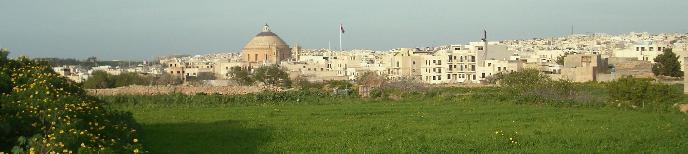
This area is furthermore made unique by the fact that no valley crosses through any other town on village on these islands. These fields are situated at the very heart of the valley, right at the spot closest to the town centre, directly in line with the magnificent Rotunda Dome. 
According to the Central Malta Local Plan the area has been indicated as being an integral part of a ‘Primary Town Centre’ This is the last remaining example of a town having a preserved green core, complete with several iconic features of Maltese countryside and its rural qualities.


Despite all the above, an application to build an old people's home was submitted back in 2002. This was met with considerable opposition by several entities including the Mosta Local Council, Harsien Patrimonju Mosti, Nature Trust International (Malta), Alternattiva Demokratika, scholars, environmentalists, and a large number of residents.

These objections served to no avail for a building development outline plan was approved and a second application was submitted by the developers, using a different name and details, for a massive development consisting of 24 apartments and 26 garages!

This was consistently refused by MEPA but after 4 years, precisely in February 2009, a reconsideration was approved by the authority's Development Control Commission Board (DCC).

To add insult to injury, withdrawals of the building lines suggested by MEPA itself in 2002 were approved in 2006 making most of this area a building-free zone. It is now referred to as a site of ecological importance, as per the authority's own server maps on its website.

But before we carry on,
let us go a few steps back, right to the origins of this whole catastrophe. First of all, HPM would like to refer you to parliamentary question 16584 of the 30.05.2000.


Translation: Hon. Michael Borg asked the Ministry of the Interior:
What possibility is there that this valley be scheduled, both because of its characteristics as well as the preservation of an amount of Carob Trees?

Hon. Tonio Borg: Mosta Valley is one of the most important valleys in the Maltese Islands for environmental, ecological, agricultural and cultural reasons, as well as due to water resources. The planning authority (MEPA) intends protecting the complex of valleys that form part of Wied il-Ghasel by scheduling it as soon as all the studies have been finalised. So far, a substantial part of this valley complex has been studied already.

The scheduling exercise is aimed to provide protection of all its important constituents including the large quantity of Carob, and other trees, that grow in the valley.


Subsequently, in 2001, the central part of the valley was eventually registered within the World Database for Protected Areas lists as
 WDPA ID 174768 and given a Category III Natural Monument Status of international importance.


Since then, Wied il-Ghasel remains listed as a Nature Reserve within the:

World Database on Protected Areas

managed by the

United Nations Environment Programme

(UNEP)

& its

World Conservation Monitoring Centre

(WCPA)

It is also considered to be so by the

International Union for Conservation of Nature

(IUCN / The World Conservation Union)


In the

 
IUCN Management Category -
‘Protected Areas and World Heritage Programme’

t
he definition of a protected area adopted is:


"An area of land and/or sea especially dedicated to the protection and maintenance of 

biological diversity

 and of

natural and associated cultural resources,

 and managed through legal or other effective means "


It was classified as a CATEGORY III – Natural Monument: Protected area managed mainly for conservation of specific natural features:

“Area containing one, or more, specific natural or natural/cultural feature, which is of outstanding or unique value because of its inherent rarity, representative or aesthetic qualities or cultural significance.”

This may be verified by opening the following link to the IUCN's Protected planet Database:


It shows a map-server which clearly illustrates the area of Wied il-Ghasel that is protected. Now the fields and valley ridge concerned are at the very centre of the protected area.


This is unquestionable evidence of HPM's persistent claims that this site enjoys international recognition and protection. There are another 154 such protected areas in Malta.

It is also unquestionable that the development has been approved on the very ridge of the valley, which shall be excavated and built up.

This is evidenced by the following extract from MEPA's own Case Officer’s 2007 refusal recommendation:

"1 - The proposed development is unacceptable as it would result in a deleterious impact on the amenity of the area and of existing adjoining uses. It therefore constitutes bad neighbour and overdevelopment and so conflicts with Structure Plan policy BEN 1 which seeks to protect the amenity of existing uses and DC2005 policy 2.7."

"2 - The proposed building, which is situated on a valley (ridge), does not conform with Development Control Policy & Design Guidance 2000 policy 2.7 (iv), that each floor shall be sucessively setback on the side elevations. The development would be unduly obtrusive and detract from the landscape, and so would be counter to Structure Plan policy BEN 2 and DC2005 policy 3.8(d)."

May we draw your attention to the highlighted text, constituting official and professional acknowledgment to our claims.

In face of this evidence, no person or institution may deny the facts as they stand, black on white, public, for all to see. This IS the valley ridge of an internationally protected valley.


HPM would now like to refer to a Press Release from 2011 issued by MEPA in relation to the permit in question.

Link:


MEPA Insists it acted within the parameters of the law

HPM would like to bring particular attention the following statement made by MEPA within this PR:

“It (MEPA) pointed out that this particular case was determined much prior to the coming into force of the new legislative and administrative procedures, which were intended to enhance and ensure that all decisions were transparent and subject to sustainable development principles.”

HPM would like to remind you that the first permit for an old people’s home was made in July 2002. A second permit was then applied for in 2005, under a different name. This eventually led to a final approval in February 2009, for apartments and garages instead. Since the DCC board approved the permit in 2009, the permit should have been issued according to the legislation then in force. And what about the following?

We hereby make reference to policy RCO.29 of 1990.

"No new physical development will normally be allowed on the sides of valleys and especially on valley watercourses except for constructions aimed at preventing soil erosion and the conservation and management of water resources"

HPM cannot understand the meaning of this policy, and demands an explanation as to why it was not adhered to, in allowing an outline permit to be approved 12 years later, and yet another full development permit to be approved 19 years respectively after the regulation was made public.

The regulation contains a loophole of course, and such is the word ‘normally’. Normally is not permanently and thus in abnormal circumstances, this policy may be waived. Such an abnormality would perhaps constitute an application for something on the lines of an old people’s home!

It would not surely not constitute some 2 dozen apartments and nearly as many underlying garages. Or would it?

What is certain is that no appropriate assessment was carried out prior to the approval of the outline permit in accordance with the provisions of the Flora, Fauna and Natural Habitats Protection Regulations (L.N.311/06)

Back in 2002, the Planning Data Base Map (Co-ordinates: 47883/74518), shows that more than 60% of the site earmarked for the proposed old people’s home was already designated as being outside development zone (ODZ). This is also shown in the Temporary Provisions Scheme Number 23.

Furthermore, it should be noted that Policy Map 47 in the Central Malta Local Plan, (Policy Maps for Public Consultation), indicates that the limits-to-Development Boundary passing through the site is to be changed in a manner which would render most of the site ODZ.

We hereby refer to Area Policy Map M001 in the CMLP (General & Area Policy Proposals) and Map.A11 in the appendix A of the said CMLP (Policy Maps for Public Consultation). The yellow line in dashes is the old demarcation line. In 2002 MEPA proposed retreating the borders as not to allow any further developments directly adjacent to the valley. This is the Green dotted line.

HPM would like to point out that the concerned application PA/03882/02 was submitted on the 9th July 2002, while policy map A.11. was issued in June 2002.

For this reason, the applied-for development permission should not have been granted under the provisions of Structure Plan Policy BEN 4, whereby it is stated that:

“During the interim period between the commencement date of the Structure Plan and the adoption of any particular Local Plan, permission will not normally be given unless the Planning Authority is satisfied that such permission would be unlikely to compromise the objectives of the review forming part of Local Plan preparation.”

HPM would also like to bring to attention to the fact that approval of the second permit 05560/05 was approved by the DCA in February 2009.

This despite the ratification of map A.11 in the revised CMLP of July 2006, and the following policies found within.

Central Malta Local Plan (CMLP)
2.1.3

"Most of the urban areas in the CMLP localities are residential in character. The Local Plan’s primary goal is therefore to improve the urban environment mainly by means of policies that protect the amenity of all residential areas. These policies safeguard residential areas against bad neighbour developments and from overdevelopment, promote residential rehabilitation projects, protect existing urban spaces and important streetscapes, restrain car usage, improve conditions for pedestrians and ensure the additional provision of open spaces. The remaining rural areas in the central localities also require protection and this is achieved by restraining further urban expansion, by protecting areas of conservation value and by designating strategic open gaps between existing settlements."

2.2.4
"Certain residential areas have become unpopular to live in due to the establishment over a period of time of a number of commercial and bad neighbourly uses. As a result, a number of urban areas have been transformed into areas of mixed use.
The importance of safeguarding the character of all residential areas cannot be overemphasised, and to this effect the objective seeks to improve the residential environment by controlling bad neighbour developments."
(relevant SP Policies BEN1, IND7)
(relevant CMLP General Policies CGO7, CG08)

2.3.2
"The provision of public open spaces within the urban areas of the Central Localities is very limited. Policies are therefore required in order to ensure the protection of these important landscaped spaces. The progressive introduction of more greenery in strategic urban locations and the embellishment of public open spaces and squares, including enhancement of the character of town and local centres will gradually upgrade the public realm. Within the various Urban Conservation Areas, internal open space enclaves play a very important role in maintaining a very high quality urban environment."

"The plan therefore identifies and protects these open space enclaves. The conservation, protection and enhancement of existing public open spaces private open space enclaves and urban ‘lungs’ is an objective of the Local Plan for improving the urban environment."
(relevant SP Policies BEN18, BEN19, UCO4, UCO6, UCO12, UCO13, RCO32)
(relevant CMLP General Policies CG09, CG11, CG18)"

The area concerned in Mosta was duly designated as

The Mosta Environmental Constraints Map MOM7

The Mosta Environmental Constraints Map MOM7
(which as the name suggests specifically designates which areas may be built and otherwise). It clearly shows that most of the area is a listed Ecological Area/Site (See policy CG 22). The approved plans were not issued according to these constraints and are fully in contrast with several DPA policies, more of which are hereby reproduced.


So it is clear that the development permit violates several of MEPA’s own urban and rural policies.

And when it comes to the validity and meaning of constraints, let us take a look at MEPA's own website for the anwsers:

HPM would also like to share the following information taken from MEPA's website. Any comments, at this stage, are superfluous!

LOCAL PLANS INTERPRETATION DOCUMENT


This guidance is intended to achieve a number of objectives namely :

a) To facilitate policy interpretation of Local Plan Policies

b) To indicate the procedure when identified situations arise

c) To guide interpretation when identified anomalies arise

"It is a dynamic document in the sense that it is envisaged to be continually updated to serve as a reference point when issues of policy interpretation arise..."

 "It is hoped that this guidance will also serve to reduce inconsistencies in recommendations and decisions so that the planning process is rendered more equitable and disagreements arising from different interpretations on broadly similar cases are as much as possible avoided."


FREQUENTLY ASKED QUESTIONS IN RELATION TO THE

APPLICATION AND INTERPRETATION OF LOCAL PLANS:


Vi. WHAT IS THE LEGAL STATUS OF CONSTRAINTS?:


"Those constraints that have been adopted in the Local Plan, together with constraints made by MEPA or any entity within MEPA or the Planning Appeals’ Board, are to be applied and interpreted as policies of the said Local Plan.

All other constraints made at the request of third parties, including government entities, are to be interpreted as a requirement for consultation, the outcome of which must be applied in accordance with usual procedure."


One also comes across this within the same document:

1.1   Constraints:

How are constraints arising from constraints Maps to be interpreted?


"Those constraints which originate either from the Local Plan or are based on MEPA decisions shall be the basis of determination of a development planning application. In cases where there is conflict between a previous MEPA decision (including PA and PAPB decisions) and the current Local Plan, the provisions of the current Local Plan should prevail."

HPM asks whether the approval of this permit can seriously be considered to be in line with all the above.

HPM would also like to know the meaning of a 'protected site' and asks WHO is responsible and accountable for the monitoring, protection and preservation of such sites?

HPM awaits clarification on why policy RCO.29 was clearly not adhered to, along with all the above quoted relevant policies and including Mosta’s constraints map MOM7

HPM appeals yet again to all those with the authority and responsibility, and all those of good sense and will, to act and implement justice with immediate and absolute effect, by withdrawing development permit PA05560/05.

This in view of several factors brought to the authority’s attention over the past 3 years, and including the persistent lack of adherence to the conditions determined in the reconsideration report.

HPM has presented ample evidence of these breaches, some of have already been verified and found to be correct and others which are still under investigation. This is no more than a repetition of what happened in 2009.

HPM would like to remind the authority that the decision was upheld subject to a number of conditions. The fact that these have not been respected by the developer on more than one instance and in several ways makes the party concerned a relapser.

This apart from the fact this permit should have never even been considered, due to its absolute contrast with all the relevant policies listed earlier and due to its protected status.

How is it possible that we are to rest our minds that the permit was issued with due diligence when in July 2011 a question put to the authority concerning the part of the building where excavation two floors deep will come to within less than a metre of the valley wall proper, with the near-surety that this will collapse?

So far, the only reply this particular concern is that it is currently being discussed internally and being looked into, or examined accordingly.

Since when are such fundamental issues concerning such an important site debated and considered AFTER the permit has been issued, and only after the insistence of HPM and other NGOs for MEPA to do so? And why is this being considered over 2 years from the original commencement notice?

Going back to MEPA’s own statement taken from the aforementioned PR:
 
"However, Mepa is an institution that is mandated to act within the parameters of existing laws and policies, and in this case it has acted entirely within these parameters,"

HPM asks whether the approval of this permit can seriously be considered to be in line with the above. HPM believes that laws are there to be observed by everyone, especially the same authorities who are supposed to enforce them.

We also believe in correctness and legality, and we certainly expect the institutions entrusted and paid by us, as citizens and taxpayers in a modern democratic EU country to assume the responsibility of fair government.

Above all, we believe that discrimination and lack of accountability should not be perpetrated nor supported by any such authority or institution.

It is in this regard that HPM would like to bring to your attention another application lodged with this same authority. We hereby refer to PA/06546/07 for a development just across on the opposite valley ridge.

The relevant case officer reports are being uploaded here (in part). In both case reports the permit was refused.
HPM would therefore like to point out the many policies and regulations quoted by the respective case officers in justifying their refusals, for what is an integral part of the site we are fighting to save.

It is crucial therefore that regulatory procedures be initiated and action taken immediately in order to safeguard our rural heritage and to curn this gross abuse.

The evidence presented above, shows black on white, that this permit was not issued in accordance to a considerable number of policies and regulations governing such applications and subsequent permits in such sensitive areas.

MEPA’s own case officers’ reports list with eloquent clarity the full list of these measures, several of which have been in place well before 2009 and as far back as 1990, ie 12 years before the first application of 2002. And what about the following?

STRUCTURE PLAN FOR THE MALTESE ISLANDS

DECEMBER 1990


POLICY BEN 1:
Development will not normally be permitted if the proposal is likely to have a deleterious impact on existing or planned adjacent uses because of visual intrusion, noise, vibration, atmospheric pollution, unusually high traffic generation, unusual operating times, or any other characteristic which in the opinion of the Planning Authority would constitute bad neighbourliness.
 
POLICY BEN 2:
Development will not normally be permitted if, in the opinion of the Planning Authority, it is incompatible with the good urban design, natural heritage, and environmental characteristics of existing or planned adjacent uses, and is unlikely to maintain the good visual integrity of the area in which it is located. There will be a presumption against development which does not generally observe the design guidelines issued by the Planning Authority for built-up areas.

POLICY UCO 6:
Within Urban Conservation Areas, the basic objective will be to preserve and enhance all buildings, spaces, townscape, and landscape which are of Architectural or Historical Interest, and generally to safeguard areas of high environmental quality and improve areas of low quality.

POLICY UCO 13:

Wherever possible, by control or positive intervention, buildings of architectural, historical, and townscape importance, gardens, and other areas of architectural or historical interest will be conserved.

POLICY UCO 16:
Public awareness of and interest in conservation will be promoted, as a means of assisting the realisation of conservation objectives.

PART 2:
POLICIES

15. CONSERVATION

Natural Resources in Rural Areas

15.21

The countryside and the coast are recognised as being two of the nation's most valuable natural resources. Together, countryside and coast provide the backdrop and raw material for much of the country's industrial, commercial, agricultural, and recreational activities. The intensity of use of these resources, and the delicate equilibria operating within and maintaining them, necessitate very careful management in order to harmonise the various uses of the countryside and coast and derive maximum benefit from them without their deterioration. 

Recognising this, the Planning Authority will rigidly control development of the countryside and coast in general, and particularly of aquifer recharge areas and other important water catchment areas, afforestated areas,

sites of ecological and scientific importance, sites of scenic value,

coastal cliffs and sandy beaches, established and proposed bird sanctuaries, nature reserves, national parks, other types of protected areas, and of areas prone to erosion.


15.25

The limited land area and high population density result in strong pressure being exerted on the natural environment, particularly in areas which are relatively undeveloped. Many species, endemic and other valuable ones included, are threatened with extinction, while habitats are fast degrading. Some geological sites are in danger of complete obliteration, while many intrusive elements are spoiling the scenic value of the landscape.


15.26

The natural landscapes of the Islands are intimately related to agricultural activity. Both have to be protected from urbanisation, and conflicts between them have to be resolved.


We hereby conclude our own list of reasons, fully substantiated with fact and legal references, and demand that the required measures to rectify, and put a final end to this abuse be taken accordingly. HPM sincerely hopes that good sense and justice shall prevail, and that this unfair and undemocratic abuse of both nature and residential rights is curbed immediately.

-------------------------------------------------------------------------------------
For a full case history including a fully graphic account, also take a look at our:

-------------------------------------------------------------------------------------

It is not only MEPA that has a say when it comes to rural planning and conversation. The Ministry for Resources and Rural Affairs have their own policies. Read more about them and also about relevant EU legislation here:

Supplementary Legislation...and abuse!


Make a Free Website with Yola.